Need a commercial cleanout? Call (336) 518-6659 for a free on-site quote. Same-day and next-day service available across the Triad and Triangle.
When you're tasked with cubicle removal, it's crucial to focus on sustainability and efficiency. Start by exploring eco-friendly disposal options like recycling and donating. Set clear objectives and budgets to guide your project. Make certain the disassembly process is well-planned and safe. By doing so, you'll pave the way for a more adaptable, collaborative workspace. Ready to transform your office environment while maximizing productivity and comfort? Let's explore how you can achieve this effectively.
Sustainable Cubicle Disposal Options
When considering sustainable cubicle disposal options, it’s essential to prioritize eco-friendly methods that minimize environmental impact.
Start with recycling programs that accept materials like metal, plastic, and wood. These programs guarantee that your old cubicles are transformed into reusable resources.
Next, explore donation services. Many organizations need office furniture and will gladly accept your gently used cubicles. This not only helps the community but also keeps items out of landfills.
Consider donating gently used cubicles to organizations in need, helping the community and reducing landfill waste.
Resale opportunities offer another sustainable choice. Platforms dedicated to office furniture resale can connect you with buyers looking for affordable options.
Finally, consider opting for eco-friendly materials if you're replacing cubicles. Choose items made from sustainable resources to reduce your carbon footprint.
Plan Your Cubicle Removal Project
Sustainable disposal options set a strong foundation for an eco-friendly approach, and now it's time to efficiently plan your cubicle removal project.
Start by outlining clear objectives and scope. Consider budget constraints to guarantee cost-effectiveness. Analyze potential expenses, including labor, transportation, and disposal fees.
Prioritize team coordination by designating roles and responsibilities to guarantee seamless execution. Schedule regular meetings to keep everyone informed and aligned.
Evaluate your timeline carefully, accounting for any possible disruptions. Create a detailed checklist to track progress and address any challenges swiftly.
Engage with all stakeholders early to gather input and address concerns. This structured planning guarantees a smooth shift and minimizes downtime.
With a precise plan, you’ll streamline the process and maintain operational efficiency.
Step-by-Step Cubicle Disassembly Methods
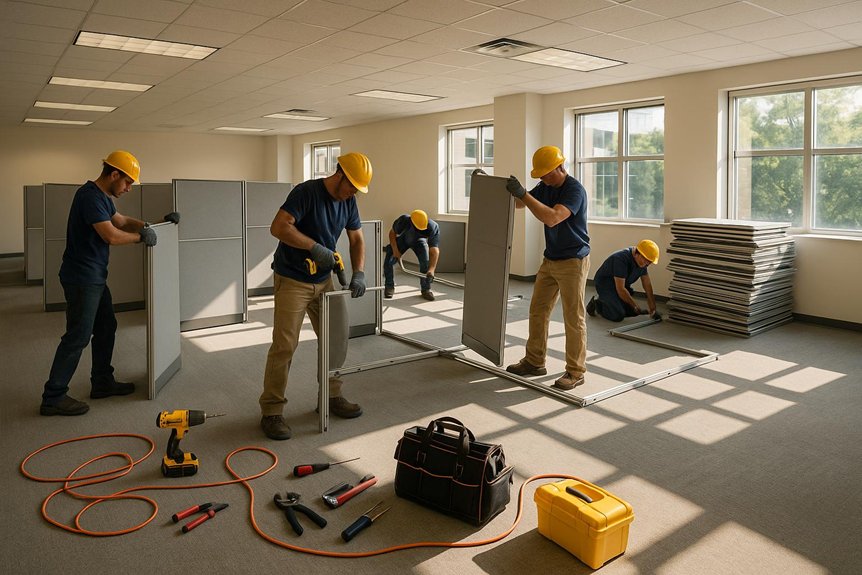
To start disassembling your cubicle, gather essential tools like screwdrivers, pliers, and a rubber mallet.
Confirm safety by checking off items on your safety precautions checklist, including wearing gloves and goggles.
With everything ready, you’ll be set to follow the step-by-step methods efficiently.
Tools and Equipment Needed
Before you begin dismantling cubicles, make sure you have the right tools and equipment to streamline the process. Start with a cordless drill and a set of screwdrivers, which are essential for most removal techniques.
A rubber mallet will help with stubborn panels. Have a utility knife ready for cutting any attached materials. Use a pry bar to separate tightly fitted parts.
For disposal methods, prepare a dolly or hand truck to transport disassembled pieces efficiently. Gloves and safety goggles will protect you during the process.
A labeling system, like colored tape, guarantees parts are organized for recycling or disposal. With these tools, you’ll efficiently disassemble and prepare cubicles for removal, guaranteeing a smooth shift to the next phase.
Safety Precautions Checklist
Begin with a clear understanding of essential safety precautions to guarantee a smooth and secure cubicle disassembly. First, assess ergonomic considerations by confirming team members use proper lifting techniques to prevent strain. Use tools with comfortable grips and maintain good posture throughout the process.
Next, focus on debris management. Clearly mark the disassembly area and keep it clutter-free to avoid tripping hazards. Wear safety gear like gloves and goggles to protect against sharp edges and falling components.
Identify and disconnect power sources before beginning any work to prevent electrical hazards. Communicate clearly with your team to coordinate each step effectively.
Finally, make sure everyone is aware of emergency exits and protocols. Following this checklist will help you disassemble cubicles safely and efficiently.
Figure Out Timing and Logistics
Timing and logistics are essential for a smooth cubicle removal process. Start by establishing a clear project timeline. Determine the removal date, and work backward to schedule necessary steps.
Effective employee communication is vital; inform staff early about the timeline and expectations to minimize disruptions.
Early and clear communication with staff minimizes disruptions during the cubicle removal process.
Next, coordinate with vendors for dismantling and disposal. Confirm they’re available on your removal date. Assess building access and elevator usage to avoid bottlenecks.
Consider staging areas for temporary storage if needed. Review your facility’s schedule for any potential conflicts, like meetings or events.
Plan removal during off-peak hours to reduce impact on daily operations. Regularly check progress against the timeline, and adjust as needed. A well-structured plan guarantees a seamless shift.
Safety Tips for Cubicle Removal
When removing cubicles, guaranteeing safety is paramount.
Begin by evaluating the workspace for ergonomic considerations. Proper lifting techniques are essential to prevent injuries. Equip your team with gloves, hard hats, and protective eyewear. Secure heavy panels and dismantle them systematically to avoid sudden collapses. Use tools correctly and make sure they're in good condition to prevent accidents.
Involve employees by gathering feedback. They might provide insights about potential hazards or areas needing extra caution. Clear communication helps everyone stay informed and vigilant. Designate a safety supervisor to oversee the process and address concerns promptly.
Keep pathways clear of debris to prevent tripping hazards.
Finally, schedule removals during off-peak hours to minimize disruptions and maintain a safe environment for everyone involved.
Maximize Space Post-Removal
With safety measures firmly in place during removal, it's time to transform the newfound space into a more efficient environment.
Focus on space optimization and layout redesign to enhance productivity and comfort.
Space optimization and layout redesign are key to boosting productivity and comfort.
1. Assess Needs: Determine the essential functions of the space.
Consider what activities will take place and what equipment or furniture is necessary.
2. Flexible Furniture: Invest in modular furniture that can adapt to changing needs.
This flexibility allows for easy reconfiguration.
3. Zoning Areas: Create distinct zones for collaboration, quiet work, and relaxation.
Use furniture and decor to define these areas clearly.
4. Lighting and Acoustics: Improve lighting to enhance mood and focus.
Consider acoustic panels to minimize noise and boost concentration.
Frequently Asked Questions
How Can I Repurpose Cubicle Materials Creatively?
Transform cubicle materials by upcycling furniture into unique pieces. Turn partition panels into stylish room dividers or bulletin boards. Use desktop surfaces to create custom tables or shelving. Incorporate fabric and metal elements into artistic installations for office decor. With a bit of creativity, you can craft sustainable options that enhance your space.
What Are the Legal Requirements for Cubicle Disposal?
When you’re disposing of cubicles, check local regulations to guarantee compliance. Identify any hazardous materials like adhesives or treated wood. Contact your local waste management authority for guidelines on handling these materials. It’s essential to separate recyclable components and secure proper disposal. Obtain any necessary permits or documentation.
Can I Donate Cubicles to Nonprofit Organizations?
Yes, you can donate cubicles to nonprofit organizations . Start by identifying potential nonprofit partnerships that could benefit from your donation. Contact them to discuss their needs and guarantee they can accommodate the furniture. Arrange the donation process by scheduling pickup or delivery. Verify the cubicles are in good condition and comply with any specific requirements the nonprofit might have. This proactive approach guarantees a smooth changeover and benefits both parties.
How Do I Assess the Value of Used Cubicles?
To assess the value of used cubicles, first examine the cubicle condition . Check for wear, damage, or outdated designs. Next, evaluate the resale potential by researching similar cubicles in the market. Consider factors like brand, materials, and demand. Take high-quality photos and note any unique features. This structured approach helps determine a fair price , ensuring you maximize returns while appealing to potential buyers.
Are There Companies That Offer Cubicle Recycling Services?
Yes, you’ll find companies that specialize in cubicle recycling services . They focus on cubicle sustainability by refurbishing furniture , ensuring materials are reused effectively. Start by researching local recycling firms or national companies that emphasize eco-friendly practices. They’ll assess your cubicles, determine refurbishment options, and handle the process efficiently. This approach not only minimizes waste but also supports sustainable office management , aligning with environmental goals.
Related service: Office Furniture Removal services →


![How Much Does an Office Cleanout Cost? [2026 Pricing Guide]](/images/resources/How_Much_Does_an_Office_Cleanout_Cost_2026_Pricing_Guide.jpg)